Best Luxury Hotels in Fukuoka — Where to Stay in Style
Seven properties travelers consistently choose when budget is not the constraint. From Fukuoka's only internationally branded ultra-luxury hotel to design boutiques and waterfront resorts, here's where to stay if you want Fukuoka at its most polished.
Last updated: May 2026
Curated Google My Map — third-party cookies may be set by Google; see privacy policy.
If you’re searching for a Fukuoka hotel and budget isn’t the deciding factor, the field narrows quickly. Seven properties consistently appear in luxury traveler reviews and across editorial coverage of the city. The Ritz-Carlton Fukuoka sits above the rest as the city’s only internationally branded ultra-luxury anchor; the remaining six span from international five-star to design boutiques to premium business stays.
This guide separates them by who each one is actually for: the ultra-luxury splurge, the international anchor, the boutique design pick, the premium business stay, the waterfront resort, the modern riverside, and the European-style longer stay. It then goes deeper where generic hotel guides don’t — breakfast quality by property, lounge access strategies, seasonal price patterns, and a decision matrix for traveler profiles.
The short version
| Hotel | Area | Breakfast | Lounge | Pool | Spa | Family-suitable | Yamakasa impact | Price range |
|---|---|---|---|---|---|---|---|---|
| The Ritz-Carlton, Fukuoka | Tenjin / Daimyo | Viridis farm-to-sky, incl. Club Floor | Club Lounge (5 daily offerings, Club Floor) | Skyline indoor pool | Ritz-Carlton Spa (Best Hotel Spa 2024) | Limited (no connecting rooms) | Low — Daimyo, unaffected | ¥80,000–¥200,000 |
| Grand Hyatt Fukuoka | Hakata | Buffet, ¥4,500–¥6,500 | Grand Club (floor upgrade) | 25m indoor, 18+ only | Full (Club Olympus / AN SPA) | Yes (connecting rooms, tatami suites) | High — float route passes hotel | ¥25,000–¥70,000 |
| Hilton Fukuoka Sea Hawk | Momochi | Buffet in 40m atrium, ¥4,200–¥5,800 | 33F Executive (floor upgrade or Diamond) | Indoor + outdoor, all ages | Iwoburo public bath, spa | Yes (Japanese-Western suites) | Low — Momochi is far from Kushida | ¥18,000–¥70,000 |
| The Basics Fukuoka | Hakata | WHY NOT buffet, ¥3,800–¥4,500 | Out of Bounds (Episode / Story rooms) | None | None | Limited (no connecting rooms) | Moderate — east Hakata, not on route | ¥14,000–¥45,000 |
| Solaria Nishitetsu Hotel | Tenjin | Red Flamma buffet, ¥3,500–¥4,200 | None | None | None | Limited | Low — Tenjin side | ¥16,000–¥55,000 |
| Hotel Vista Fukuoka | Nakasu | Buffet, ¥2,000–¥2,500 | None | None | Musubi-no-Yu public bath | No (17㎡ standard rooms) | Low — Nakasu-Kawabata area | ¥10,000–¥30,000 |
| Hotel Monterey La Soeur | Tenjin | Buffet, ¥2,800 | None | None | None | No (compact rooms) | Low — Daimyo, unaffected | ¥13,000–¥35,000 |
The picks

The Ritz-Carlton, Fukuoka
Fukuoka’s only internationally branded ultra-luxury hotel and the sharpest signal that the city has joined the first tier of Japanese urban luxury destinations. Opened July 2023, anchoring floors 10–19 of the 19-story Daimyo Garden City mixed-use tower in Chuo-ku — a Marriott Bonvoy Ritz-Carlton property, making it unique in Fukuoka Prefecture. The property holds a Michelin Key designation and won Japan’s Best Hotel Spa 2024 (World Spa Awards). Five dining concepts in-house, anchored by Genjyu (kaiseki, sushi, and teppanyaki in a Hakata-ori textile-panelled room) and Viridis (farm-to-sky Western cuisine with Kyushu-sourced produce). The signature indoor skyline pool — floor-to-ceiling glazed on upper floors — is the most-cited single amenity in English-language guest reviews of any Fukuoka luxury hotel. Club Floor guests (floors 16–19) receive five daily food-and-beverage periods in the Club Lounge, effectively removing most food costs across a two-night stay; multiple reviewers report this pays for the Club premium. Butler service is 24h and explicitly cited in the majority of positive reviews for personalization. Location is Daimyo — 10 minutes on foot from Tenjin Station, immediately surrounded by Fukuoka’s densest concentration of independent coffee roasters and boutiques, and 12 minutes walk from Ohori Park’s 2 km lake loop. Ratings: 9.2 on Booking (320+), 9.1 on Agoda (290+), 4.6 on Google (1,100+) — the highest OTA scores of any hotel in this guide.
Demand note: The Ritz-Carlton Fukuoka is Fukuoka’s Tier 0 luxury anchor — the property international luxury travelers search by name when the city is on their itinerary. Club Floor rooms and the double spa treatment suite are the fastest-selling configurations. Book Club Floor 6–8 weeks ahead for any weekend stay; the spa requires a minimum 48-hour advance booking on weekends and fully books out at peak periods (spring, Golden Week, autumn). Yamakasa window (July 1–15) has zero pricing impact — the Daimyo location is well west of the Hakata Gion float route.

Grand Hyatt Fukuoka
The international five-star anchor for the Hakata side of central Fukuoka and the highest-search-volume luxury hotel in the city (40,500 monthly searches, May 2026). Directly connected to Canal City Hakata via covered indoor access — you can move between the hotel lobby and the 11-story mall without stepping outside, which matters on rainy days and with kids. On-property: a 25-meter indoor pool, full-service spa (Club Olympus / AN SPA FUKUOKA), and five restaurants including Fukuoka Nadaman kaiseki and Bar Fizz overlooking Canal City’s fountain shows. Standard rooms run larger than typical Fukuoka luxury by Japanese standards; deep soaking tubs with separate showers are standard. The 85㎡ Japanese-style tatami suites are the family-luxury unicorn in this city — comparable properties don’t offer them. Reviews at 8.6 on Booking (1,500+ reviews) and 8.8 on Agoda (2,797) reflect consistent international-traveler satisfaction with multilingual concierge support. The Grand Club lounge (floor upgrade required) is the property’s club access mechanism, covering morning breakfast and evening canapés. Pool is restricted to guests 18 and over outside designated family periods — confirm if traveling with teenagers.
Demand note: Japanese Style Suites and Club Floor rooms are the fastest to sell out across all six properties in this guide. Book 3+ months ahead for spring cherry-blossom weekends (late March–early April) and autumn foliage dates (October–November). Yamakasa festival week (July 1–15) drives severe demand — Hyatt World of Hyatt members should lock in points rates well ahead.

Hilton Fukuoka Sea Hawk
Fukuoka’s most distinctive luxury silhouette — a 35-floor sail-shaped tower on the Momochi waterfront with 18,100 monthly name searches. The defining experience is the 40-meter-high glass atrium (Seala Brasserie) where breakfast is served, and unobstructed views of Hakata Bay, Fukuoka Tower, and Momochi Beach from floors 30 and above. Adjacent to PayPay Dome (1–3 min walk), so SoftBank Hawks game nights and major concerts cause the sharpest price spikes of any property in this guide — sometimes 2–3× standard rates. Location trade-off is real: 15–20 minutes on foot to Tojinmachi Station, ¥2,500–¥3,500 by taxi to Hakata. Five restaurants on premises including 35th-floor teppanyaki at Kinyohtei. The 33rd-floor Executive Lounge with 270-degree bay views is restricted to Executive floor guests (rooms 30–33) and Hilton Honors Diamond members. Pool (Sotokoto Club, indoor and outdoor) requires an extra daily fee for standard guests — add at check-in to avoid capacity limits. The on-site Iwoburo stone public bath is accessible without pool purchase. Reviews: 8.1 on Booking, 8.3 on Agoda across 11,600+ combined reviews.
Demand note: PayPay Dome event nights (SoftBank Hawks home games March–October, plus major concerts) consistently produce sold-out or near-sold-out conditions with rates 100–200% above standard. Check the Dome schedule before finalizing dates — the adjacent hotel becomes the most expensive room in Fukuoka on those nights.

The Basics Fukuoka
The second-highest-search-volume hotel by name in Fukuoka (33,100 monthly searches) and the most-photographed property in the city. The defining feature is the 42-meter circular library atrium holding 5,000 curated books across 14 wood pillars — the kind of lobby that generates Instagram reach within hours of check-in. The building is a 2020 rebrand of a Michael Graves-designed property (formerly Hyatt Regency Fukuoka), gutted and reissued as a design hotel organized around the library concept. Rooms are named for book components: Chapter (20–30㎡ standard), Episode (junior suite with Out of Bounds lounge access), and Story (top suites). A flat 7–8 minute walk from JR Hakata Station’s Chikushi-guchi exit on level pavement. WHY NOT breakfast buffet consistently scores at or above Grand Hyatt and Solaria in guest satisfaction. Reviews: 8.9 on Booking (2,400+), 9.0 on Agoda (4,100+) — the highest scores of the six properties in this guide. No public bath, no pool, no spa. The Out of Bounds lounge (Episode and Story tiers) is a quiet workspace by day and cocktail space by evening with vinyl record players; it is the single upgrade decision that most converts a standard design-hotel stay into a full property experience.
Demand note: Episode and Story rooms with Out of Bounds lounge access are the first to sell out at this property, particularly on weekends and for design-traveler events. Library atrium suites on upper floors have disproportionately high repeat-booking rates — book these 6–8 weeks ahead for weekend stays.
Solaria Nishitetsu Hotel Fukuoka
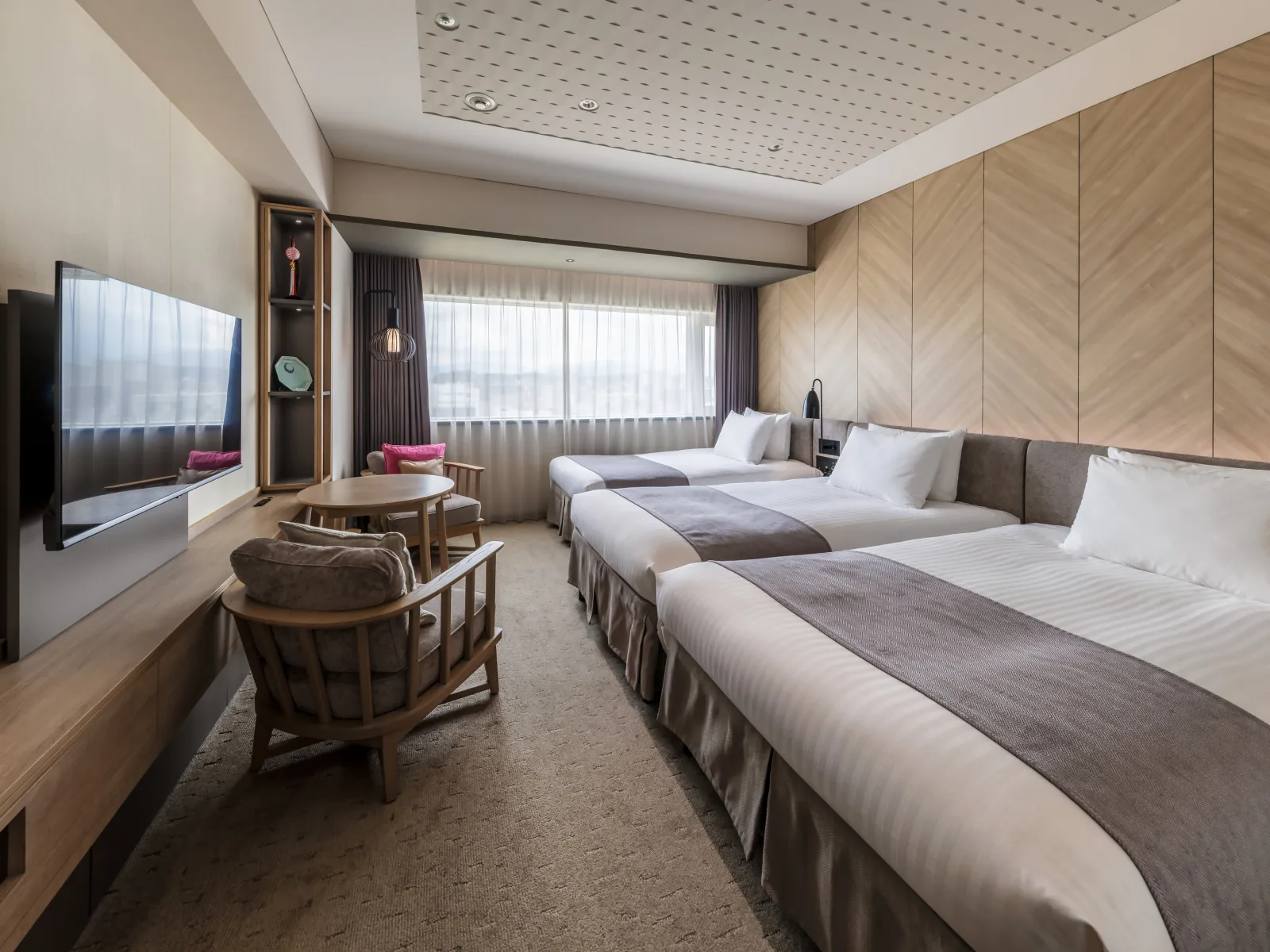
The third-highest-search-volume hotel in the city (22,200 monthly searches) and the premium choice for Tenjin. Built directly into the Nishitetsu Fukuoka (Tenjin) Station complex with underground concourse connections to the Kuko Subway Line, the Tenjin Expressway Bus Terminal, and onward to Hakata Station and Fukuoka Airport — you can travel the full hotel-to-airport route without stepping outside. Soundproofing is the most-cited reason frequent visitors return: double-paned glass insulates rooms from one of Fukuoka’s busiest intersections, and upper floors (12–16) facing Kego Park are consistently the quietest configurations. Separated Japanese-style bathrooms with deep soaking tubs are standard across all room types. The 17th-floor Red Flamma breakfast room with Fukuoka skyline views is the dining differentiator — book a slot through the front desk on check-in to avoid peak queues on weekends. No pool, no public bath, no club lounge — the premium is in transit, soundproofing, and bathroom quality. Reviews: 8.8 on Booking (3,100+), 8.9 on Agoda (6,200+).
Demand note: Upper-floor park-facing rooms (floors 12–16, Kego Park orientation) are the first configuration to book out. As Tenjin’s premium-transit anchor, the hotel sees consistent corporate demand that fills midweek inventory faster than weekend — if your dates are Monday–Thursday, book 3–4 weeks ahead minimum.
Hotel Vista Fukuoka Nakasu Kawabata
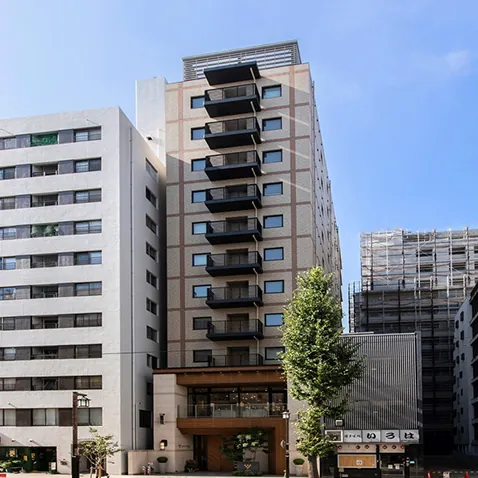
A 2019-opened property nestled against the covered Kawabata Shopping Arcade — three minutes from Nakasu-Kawabata Station (Exit 7) and ten minutes on foot to the riverside yatai food stalls. Despite the “Nakasu” in its name, the hotel sits one block east of the Hakata River; room windows face neighboring buildings, not the water, but those same buildings shield rooms from Nakasu’s late-night noise. The on-site Musubi-no-Yu public bath — with a real-time crowd indicator on the in-room TV — is the most-cited differentiator among guests who specifically sought it out. Separated Japanese-style bathrooms (toilet and bath in different rooms) are standard. Standard rooms are compact at around 17㎡ and check-out is a strict 10:00. Breakfast features Amakusa red sea bream and Fukuoka mentaiko — ingredients reviewers specifically name as above comparable price-point properties. Reviews: 8.7 on Booking (740+), 8.9 on Agoda (8,100+). Honest position: this is the arcade-adjacent quiet retreat at the bottom of the luxury bracket — not a riverside property, not a spa anchor, but the strongest combination of public-bath access and yatai proximity in the six.
Demand note: Musubi-no-Yu usage is spreading through Korean and Taiwanese travel communities. Off-peak weeknight inventory fills faster than the OTA price would suggest — particularly Golden Week (late April–May) and autumn weekends (October–November).

Hotel Monterey La Soeur Fukuoka
Belgian Art Nouveau and Art Deco interiors inside Tenjin’s Daimyo district — dark-wood panelling, mosaic tiling, genuine European antiques in the lobby, and hardwood floors in all 191 rooms (rare in Japanese hotels). The hotel sits inside Daimyo, Fukuoka’s densest concentration of independent cafes and bars; evening dining is a 1–3 minute walk from the lobby in any direction. A 2–5 minute walk to Tenjin Station’s Kuko Line (Exit 1 or 4). Repeat-visitor concentration is the highest of the six properties — particularly travelers from South Korea and Taiwan returning for the Tenjin retail and atmosphere. All rooms include Mirable micro-bubble showerheads, air purifiers, and pajamas. The breakfast buffet runs around ¥2,800 and earns above-benchmark review scores for drink and dessert variety. Caveats are real: standard rooms and bathrooms are compact, and the dark European aesthetic reads as dim against bright minimalist Japanese hotel expectations. Reviews: 8.6 on Booking (10,700+), 8.7 on Agoda (11,700+) — the highest review count of the six by a substantial margin, driven by repeat Korea/Taiwan bookings.
Demand note: Daimyo bookings from Korean and Taiwanese traveler communities are strongly concentrated at this property. Three-night+ blocks and solo female travelers from Seoul and Taipei create recurring demand patterns, with some weekend dates filling 6–8 weeks out despite the property’s 191-room capacity.
Breakfast deep dive
Breakfast quality varies significantly across these seven properties — and at Japanese luxury hotels, breakfast is often one of the highest-value amenity decisions you make at booking.
The Ritz-Carlton, Fukuoka — Viridis. Club Floor guests receive breakfast included in their rate. Viridis runs farm-to-sky Western cuisine with an emphasis on Kyushu-origin seasonal produce — Amakusa seafood, Kyushu vegetable stations, and a Japanese rice set alongside European-style pastry and egg stations. Reviewers who have stayed at both Ritz-Carlton and Grand Hyatt consistently rate Viridis higher for ingredient sourcing specificity. The room is quieter and more intimate than Seala Brasserie or Market F. For non-Club guests, breakfast is a la carte — a meaningful added cost at this price tier; the Club Floor premium is almost universally cited as cost-justified for couples.
Grand Hyatt — The Market F (Bistronomy). Full buffet format; pricing runs ¥4,500–¥6,500 per person depending on season and room type. The spread covers Kyushu regional ingredients prominently: mentaiko (spicy cod roe), Hakata-style ramen station, local fish, and broader Japanese-Western format. Reviewers consistently rate it among the best hotel breakfasts in Fukuoka, citing Kyushu ingredient variety over comparable five-star properties. The room becomes crowded on weekends — arriving before 8:00 is the practical move.
Hilton Sea Hawk — Seala Brasserie. The 40-meter glass atrium ceiling is the main event; breakfast inside it is one of the more visually striking hotel breakfast experiences in Kyushu. Pricing: ¥4,200–¥5,800 per person. Format is full buffet with a mix of Western and Japanese stations. Asian-friendly options include Japanese rice sets, miso soup stations, and dim sum on weekends. The scale of the room (1,000+ guests at the hotel) means peak window (8:30–10:00) sees queue pressure — plan before 8:00 or after 9:30.
The Basics — WHY NOT. The property’s all-day dining room runs breakfast as a buffet at ¥3,800–¥4,500. The spread skews toward a Japanese-European hybrid with local sourcing emphasis. Reviewers with exposure to comparable Hakata properties consistently score this above Solaria and comparable to Grand Hyatt for food quality. Asian-friendly: Japanese set stations are part of the standard spread.
Solaria — Red Flamma (17F). Buffet format, ¥3,500–¥4,200 per person. The 17th-floor skyline view over central Fukuoka is the atmospheric differentiator; on a clear morning the Tenjin-to-Hakata panorama is visible. Japanese and Western stations both present. For business travelers checking out before 9:00, the early-service window is better managed here than at the larger resort properties.
Hotel Vista — Vista Cafe. The most distinctive breakfast of the six for ingredient specificity: Amakusa red sea bream and Fukuoka mentaiko are both genuine Kyushu-origin ingredients that most comparable business-tier hotels substitute with generic alternatives. Pricing at ¥2,000–¥2,500 is the lowest of the group and earns disproportionately high review scores relative to price. Format is a smaller-scale buffet — not the scale of Seala or Market F, but the ingredient quality compensates.
Hotel Monterey — Dining room. Buffet format at approximately ¥2,800. Cited primarily for the drink and dessert selection breadth rather than main-course ingredient differentiation. Travelers who use the breakfast as a slow morning before Tenjin retail tend to find it cost-justified on stays of three nights or more.
Asian-friendly options summary: All seven properties provide rice and miso soup. Hilton Sea Hawk and Grand Hyatt offer the broadest Asian breakfast stations. The Ritz-Carlton’s Viridis and Hotel Vista’s mentaiko station are the strongest for Kyushu-origin ingredient specificity.
Lounge and club-floor access
Only four of the seven properties have any form of club floor or lounge, and access mechanisms differ.
The Ritz-Carlton, Fukuoka — Club Lounge (floors 16–19). Access requires booking a Club Floor room — no Marriott Bonvoy elite tier required, though Titanium and Ambassador members receive complimentary upgrade when available. The Club Lounge delivers five daily food-and-beverage periods: breakfast, afternoon tea, evening cocktails and canapés, cordials, and late-night desserts. Multiple reviewers report the five-period structure removes most food costs for two guests over a two-night stay, converting the Club Floor premium into a net positive. The lounge views over Daimyo and toward Ohori Park are the quietest and most residential of any lounge in this guide. Premium over standard floor: approximately ¥20,000–¥40,000 per night — the highest absolute premium of the seven, but reviewers consistently report it as the highest-ROI lounge in the city.
Grand Hyatt — Grand Club Garden. Access requires booking a Grand Club Floor room (a rate-tier upgrade rather than an amenity add-on) or holding World of Hyatt Globalist status. Club access covers morning breakfast in the Grand Club space plus evening canapés and select drinks. On weekends the lounge reaches capacity — Globalist members report queue situations on Saturday nights. Weekday access is significantly calmer. Room rate premium for Club Floor: approximately ¥8,000–¥15,000 above standard.
Hilton Sea Hawk — 33rd-floor Executive Lounge. Access via Executive Floor room (floors 30–33) or Hilton Honors Diamond status. The 270-degree bay views from the 33rd floor are the strongest visual payoff of any lounge in the six properties. Executive lounge covers breakfast, evening cocktails, and light snacks. The view toward Hakata Bay and Fukuoka Tower on a clear evening is the single experience most cited by Executive-floor guests. Premium over standard: approximately ¥10,000–¥20,000.
The Basics — Out of Bounds. Access via Episode room (junior suite) or Story (top suite) — no chain status required. The lounge operates as a quiet co-working space during daytime (good Wi-Fi, vinyl record players, curated reading material) and transitions to cocktail hour in the evening. Reviewers who upgraded to Episode consistently say they would repeat the purchase. Premium over Chapter standard: approximately ¥5,000–¥12,000. The most accessible club-floor equivalent in the six — no loyalty tier required, just a room-type choice.
Solaria, Hotel Vista, Hotel Monterey: No club floor or lounge of any kind. Solaria’s Red Flamma is open to all guests with a breakfast add-on; it is not a restricted lounge.
Seasonal price patterns
Price behavior at these six properties is not uniform across the year, and the variance matters for budget planning.
Spring (late March–early April)
Cherry-blossom season is the peak demand period for all six. Grand Hyatt and The Basics are most affected — proximity to Sumiyoshi and Canal City puts them in the sightseeing path. Hilton Sea Hawk sees strong domestic family demand during spring school holidays. Book 6–8 weeks ahead for any of the six during late March to early April, particularly for weekends. Solaria and Hotel Monterey have the most stable pricing in this window relative to base rates — Tenjin proximity to Maizuru Park (cherry blossom primary site) creates demand but the two properties have larger inventories.
July 1–15 (Hakata Gion Yamakasa)
Grand Hyatt is the most severely impacted — Kushida Shrine, the spiritual center of Yamakasa, is a 5-minute walk from the lobby, and the float route passes directly past the hotel’s neighborhood. Rate premiums during this window reach 150–200% above base, and the hotel books out 3–6 months in advance. The Basics (east Hakata, 8 min from Hakata Station) is moderately impacted. Hilton Sea Hawk, Solaria, Hotel Vista, and Hotel Monterey are all materially less affected. For travelers who want to watch the July 15 pre-dawn race (Oiyama, 4:59 AM from Kushida Shrine) without Hakata-side rate spikes, Solaria or Monterey combined with an early-morning Kuko Line ride (10–15 min to Nakasu-Kawabata Station) is the established workaround.
Autumn (September–November)
The most stable window across all six. Yamakasa is over, the summer heat has broken, and the school calendar keeps domestic family travel lower than spring. Autumn is when the “feel worth it” threshold drops for Grand Hyatt and Hilton Sea Hawk — base rates are at their annual lows while the property amenities are unchanged. Solaria and The Basics offer the most consistent value in autumn, with rates 20–30% below spring peaks. This is the window for lounge upgrades at a lower rate premium.
Winter (December–February)
Cold but rarely snowy in central Fukuoka. Indoor connection value rises: Grand Hyatt’s Canal City connection and Solaria’s underground concourse deliver more practical value in February than in September. Hilton Sea Hawk’s pool (indoor component) sees reduced use by casual guests — pool-access fees sometimes decrease or are waived for standard guests in January–February depending on occupancy. Hotel Monterey and Hotel Vista offer their lowest annual rates in January, making them the best value-access-to-luxury-bracket entries of the year.
PayPay Dome events (year-round)
Hilton Sea Hawk rates track PayPay Dome events throughout the year. SoftBank Hawks home games run March through October; large concerts (typically 5–8 major events per year) produce the same effect. Check the PayPay Dome schedule before finalizing Sea Hawk dates — a ¥3,000 increase in per-night rate for a multi-day event stay compounds fast.
Who should pick which
| Traveler profile | Best pick | Why |
|---|---|---|
| Ultra-luxury, no budget ceiling, want Fukuoka’s absolute best | The Ritz-Carlton, Fukuoka | Fukuoka’s only Michelin Key + Best Hotel Spa 2024 property; Club Floor removes food costs |
| International couple, first Fukuoka visit, want the “right” choice | Grand Hyatt Fukuoka | Canal City access, strongest English concierge, widest amenity set |
| Family with children (2 adults + 2 kids) | Grand Hyatt Fukuoka | 85㎡ tatami suites, connecting rooms, indoor mall access — no comparable family luxury option |
| Business traveler, multiple Tenjin meetings | Solaria Nishitetsu | Zero-transfer station integration, best soundproofing, separated soaking-tub bathrooms |
| Design-conscious couple, Instagram-first | The Basics Fukuoka | Library atrium is the highest-concept lobby in the city; Agoda 9.0 is the group’s top score |
| Anniversary / honeymoon, maximum splurge | The Ritz-Carlton, Fukuoka (Club Floor) | Butler service + Club Lounge five daily offerings + spa; the highest-review-score property in the guide |
| Anniversary / honeymoon, waterfront cinematic | Hilton Sea Hawk (Executive Floor) | 33F lounge bay view on a clear night + atrium breakfast is the most cinematic experience |
| Solo female traveler, 5+ nights, shopping focus | Solaria or Hotel Monterey | Tenjin transit integration + Daimyo neighborhood atmosphere; both have high solo-female repeat-visitor data |
| Pool-priority (will use it daily) | Hilton Sea Hawk | Only property with a real pool; pre-purchase Sotokoto Club access at check-in |
| Spa / public bath priority | Grand Hyatt (AN SPA) or Hotel Vista (Musubi-no-Yu) | Grand Hyatt for private spa treatment; Vista for public communal bath at Japanese-hotel scale |
| Lounge access without chain status | The Basics (Episode room) | Out of Bounds lounge included by room type, no loyalty tier required |
| Direct station access, no taxi | Solaria Nishitetsu | Built above Nishitetsu Tenjin Station; underground to Kuko Line in under 3 min |
| Yamakasa week visitor, want authentic experience without price spike | Solaria or Hotel Monterey | Tenjin-side base, low Yamakasa impact, 10–15 min early-morning subway to race site |
| Longer stay (5+ nights), neighborhood feel | Hotel Monterey La Soeur | Inside Daimyo — highest repeat-visitor rate of the six; walkable cafe/bar density unmatched |
How to choose
A 60-second test. Answer three questions.
-
Is budget genuinely not a consideration? If you want Fukuoka’s absolute best and ¥80,000+ per night is acceptable, The Ritz-Carlton, Fukuoka is the answer. Michelin Key, Japan’s Best Hotel Spa 2024, highest OTA scores of the seven, and a Daimyo location that beats every other option in neighborhood quality. Book Club Floor and skip the rest of this test.
-
Do amenities matter more to you than location? If pool, spa, or atrium breakfast is the reason you’re booking luxury, choose Hilton Sea Hawk (resort amenities, Momochi waterfront, furthest from Hakata transit) or Grand Hyatt (full spa, pool, five restaurants, Canal City access). If you mostly leave the hotel, choose Solaria (transit-integrated, Tenjin) or Hotel Monterey (Daimyo atmosphere, walkable dining).
-
Is design or atmosphere a meaningful purchase driver? If yes, The Basics Fukuoka delivers the highest aesthetic concentration of the six mid-range properties — library atrium to room quality ratio is unmatched in Fukuoka at that price point. Hotel Monterey delivers European atmospheric distinctiveness at a lower price point. If design is not the priority, Grand Hyatt and Solaria offer the strongest functional packages.
-
Are you traveling during Yamakasa (July 1–15)? If yes, avoid Grand Hyatt and The Basics. Solaria, Hotel Monterey, Hotel Vista, Hilton Sea Hawk, and The Ritz-Carlton are all materially less affected — the Ritz-Carlton’s Daimyo location is well west of the float route. The premium you pay for Hakata proximity during that window does not translate into a better experience — it just costs more.
If all three answers are neutral and budget is the standard luxury tier, Grand Hyatt Fukuoka is the default. Transit flexibility, English concierge depth, and the broadest amenity set make it the lowest-regret choice for travelers who haven’t yet decided what they’re optimizing for.
FAQ
Which of these seven hotels is genuinely walking distance from a subway exit?
Solaria is the closest: built directly above Nishitetsu Tenjin Station with underground concourse to the Kuko Subway Line. The Ritz-Carlton and Hotel Monterey are a 10-minute walk from Tenjin Station through Daimyo. The Basics is a flat 7–8 min walk from Hakata Station (Chikushi-guchi). Hotel Vista is a 3-min walk from Nakasu-Kawabata Station (Exit 7). Grand Hyatt requires a 12–15 min walk or one subway stop from Hakata. Hilton Sea Hawk is 15–20 min from Tojinmachi — the only property that genuinely requires a taxi or bus to the nearest subway.
Are all six accessible for wheelchair users?
Grand Hyatt and Hilton Sea Hawk have the most comprehensive accessibility infrastructure — elevators, declared accessible rooms, and step-free indoor connections. Solaria is step-free between the underground concourse and guest floors. The Basics and Hotel Monterey have elevator access to all floors; main lobby-to-room routes are step-free. Hotel Vista (2019-built) meets current step-free standards on primary routes. Confirm room-type specifics directly with each property before booking.
Best for Yamakasa festival week — avoiding rate spikes?
Hilton Sea Hawk, Solaria, Hotel Monterey, and Hotel Vista are all materially unaffected by Yamakasa pricing. For luxury travelers attending the July 15 Oiyama pre-dawn race (4:59 AM, Kushida Shrine), Solaria or Monterey are the smart base: Tenjin-side rates stay flat, and the early Kuko Line (10–15 min to Nakasu-Kawabata Station) covers the transit to the race site.
Lounge access strategy if I’m not a chain elite member?
Book upward at The Ritz-Carlton: Club Floor rooms (floors 16–19) include full Club Lounge access with five daily food-and-beverage periods regardless of Bonvoy status. Book upward at The Basics: Episode or Story rooms include Out of Bounds lounge access regardless of chain status. At Hilton Sea Hawk, Executive Floor rooms (30–33) include the 33F lounge — no Diamond tier required. At Grand Hyatt, Club Floor rooms include Grand Club Garden access. Solaria, Hotel Monterey, and Hotel Vista have no club lounges.
Pool age policy at each property — can children under 18 use them?
The Ritz-Carlton’s indoor skyline pool applies standard Japanese facility rules; tattoo restrictions are enforced (see below). Grand Hyatt pool is restricted to guests 18 and over outside designated family holiday periods. Hilton Sea Hawk’s Sotokoto Club pool allows all ages; confirm family pool hours at booking. The remaining four properties (The Basics, Solaria, Hotel Vista, Hotel Monterey) have no pool.
Tattoo policy at the spa, public bath, or pool?
Grand Hyatt (Club Olympus / AN SPA) and Hilton Sea Hawk (Iwoburo bath + Sotokoto pool) enforce visible-tattoo restrictions — standard Japanese public bathing policy. Hotel Vista’s Musubi-no-Yu applies the same. Solaria, The Basics, and Hotel Monterey have no pool or public bath; the policy is moot. Private in-room soaking tubs at Solaria and Grand Hyatt are the frictionless alternative for tattooed guests.
Honeymoon or anniversary package availability?
Grand Hyatt and Hilton Sea Hawk offer romance add-ons (champagne, late check-out, strawberry arrangements) bookable through direct channels with 48–72 hours notice. The Basics offers Celebration packages bookable direct. Solaria and Hotel Monterey handle anniversary requests at front-desk discretion. All six honor in-person anniversary requests at check-in if room upgrades are available.
Multilingual concierge — best for non-English speakers?
Grand Hyatt has the most comprehensive multilingual concierge: English, Japanese, Mandarin, and Korean, 24 hours. Hilton Sea Hawk covers the same languages with a tour desk. Solaria lists English, Korean, and Chinese front-desk fluency. Hotel Monterey and Hotel Vista have strong records with Korean and Taiwanese travelers per Booking and Agoda aggregate data. The Basics front desk handles English, Korean, and Chinese well per review aggregates but does not offer a full concierge tier equivalent to Grand Hyatt.
Cancellation policy — most generous for shoulder-season bookings?
All six offer free-cancellation rates (typically 48–72h before arrival) on flexible plans via OTA and direct booking. Solaria’s same-day cancellation window on the standard flex rate is the most cited in business-travel reviews. Yamakasa window (July 1–15) and Golden Week (late April–early May) frequently have nonrefundable-only inventory at Grand Hyatt and Hilton Sea Hawk — book refundable or accept the commitment.
When does each property feel worth it versus overpriced?
The Ritz-Carlton earns its rate when you book Club Floor and actively use the Club Lounge across at least two nights — the five daily offerings eliminate most meal costs for a couple and the butler service genuinely delivers. Without Club Floor, the rate premium over Grand Hyatt feels stark against a smaller differential in tangible amenities. Grand Hyatt earns its rate across multi-night stays that use the pool, Canal City access, and multilingual concierge. Hilton Sea Hawk delivers at its rate when you book upper floors with bay views and have a reason to stay on-property. The Basics is almost always worth it for design-oriented travelers — the atrium-to-room quality ratio has no competitor in the city at that price point. Solaria earns its rate for business travelers who optimize on soundproofing and transit. Hotel Vista is worth it for public-bath access and yatai proximity; overpriced if you skip both. Hotel Monterey earns its rate for Daimyo atmosphere and neighborhood repeat-stay value — travelers for whom location is the primary purchase.
Read next
- Hakata vs Tenjin — Where to Stay in Fukuoka
- Best Hotels Near Hakata Station — Your Gateway to Kyushu
- First-Time Fukuoka — What to Know Before You Book