Hakata vs Tenjin — Where to Stay in Fukuoka
Most travelers booking Fukuoka delay this decision until too late. A direct comparison of the city's two main hotel districts — what each does well, who should choose which, and the sub-areas inside each that change the answer.
Last updated: May 2026
Curated Google My Map — third-party cookies may be set by Google; see privacy policy.
Fukuoka has two hotel districts that travelers actually choose between — Hakata, anchored by the bullet train and subway hub, and Tenjin, the commercial center 2 km west. Reviews and guest reports consistently treat them as a binary: pick the one that fits your trip, not the one that’s marginally cheaper on the night you booked. This guide explains the trade-off, walks through the sub-areas inside each district that change the calculation, and recommends specific hotels in each.
Before the prose, the geography in one diagram — the entire central-Fukuoka hotel decision happens along a single subway line:
The short version
| Aspect | Hakata | Tenjin |
|---|---|---|
| Best for | First-time visitors, bullet train arrivals, short stays | Shopping, longer stays, fashion-forward travelers |
| Subway to Fukuoka Airport | 5–6 min (Kuko Line, direct, 2 stops) | 11–12 min (Kuko Line, direct, 5 stops) |
| Walk to shinkansen | 1–5 min on foot | 10–12 min (5–6 min subway + walk) |
| Hotel density | Highest in Fukuoka — business and tourist mix | Mid-range and upscale mix — fewer business hotels |
| Price range | ¥10,000 to ¥60,000 / night | ¥14,000 to ¥150,000+ / night (incl. The Ritz-Carlton, Fukuoka in Daimyo) |
| Nightlife proximity | 10–15 min walk to Nakasu yatai | Within Tenjin + Daimyo |
| Quietest streets | Hakataeki-minami / Hakataeki-higashi, 2–3 blocks from station | Akasaka and Ohori Park area (west of Tenjin core) |
| Festival season impact | Severe — Hakata Gion Yamakasa (July 1–15) doubles rates and books out 3–6 months ahead | Mild — knock-on effect, but inventory stays available |
| 24-hour dining density | High — chains (Matsuya, Sukiya) on hotel ground floors | Lower — convenience stores fill the gap |
| Rainy-day indoor access | Strong via Canal City, JR Hakata City, underground concourse | Strong via Tenjin Underground City (1 km of subterranean shops) |
| Stroller / wheelchair access | Excellent — station fully step-free, many hotels indoor-connected | Good on main streets, mixed on Daimyo back alleys |
Where Hakata wins
Hakata is the practical choice when transit matters more than anything else. The shinkansen arrives directly into Hakata Station; the subway from Fukuoka Airport takes only five to six minutes — Hakata is the second stop on the Kuko Line, just two stations from the airport terminal. Reviews on Booking and Tripadvisor consistently rate Hakata hotels favorably on access — “five-minute walk to the bullet train” appears across most positive guest reports.
The district is also the densest hotel cluster in Fukuoka. Within a 5-minute radius of the Chikushi-guchi (east) exit alone, there are over 30 hotels spanning ¥7,000 budget business stays to the ¥35,000+ luxury Miyako Hotel Hakata directly across the plaza. Hakata-guchi (the west side) adds the Hakata Bus Terminal — useful for airport limousine buses from FUK’s International Terminal, which the subway does not serve, and for inter-city highway buses to Nagasaki, Kumamoto, Beppu, and Oita.
Business hotels dominate the inventory, which has a side benefit: breakfast programs are generally stronger in Hakata than in Tenjin. The business-traveler customer base demands a real morning buffet, so even mid-tier properties (the b hakata, JR Kyushu Hotel Blossom Fukuoka, Hotel Forza Hakataeki II) compete on breakfast in a way Tenjin hotels at the same price band don’t. Late-night dining is the other Hakata advantage — Hakataeki-minami has clusters of 24-hour chain restaurants (Matsuya, Sukiya, Yoshinoya) on hotel ground floors, useful for late shinkansen arrivals or pre-dawn airport departures.
Miyako Hotel Hakata
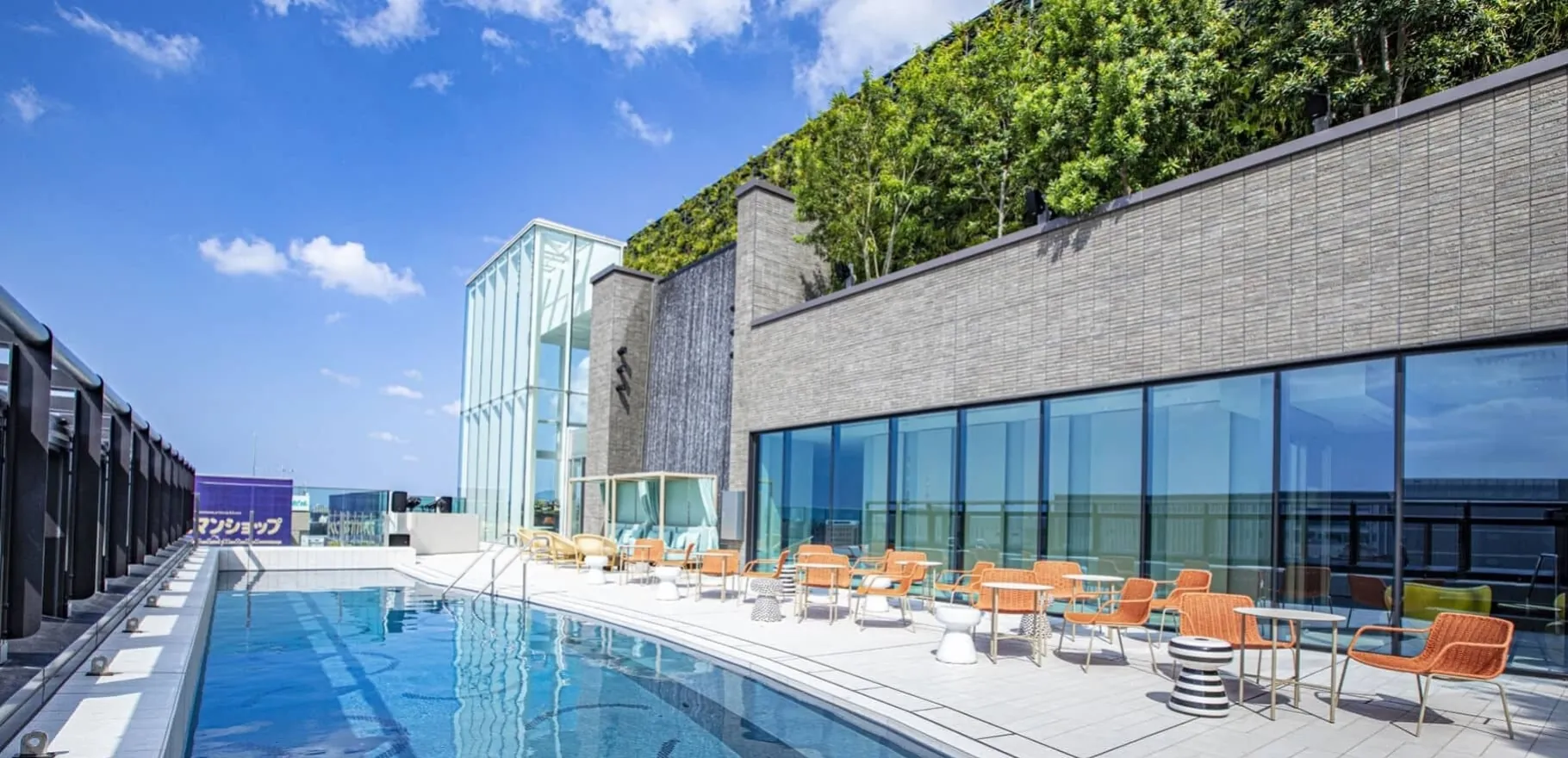
The luxury anchor directly across from the shinkansen gates — Subway Exit 7 connects straight into the hotel’s basement level, so you can move from a bullet-train carriage to the front desk without going outdoors. Rooms at 30+ square meters are exceptional by Japanese standards, the rooftop natural onsen is unusual for a station hotel, and 9.2 across 3,017 Booking reviews makes it the highest-rated transit-adjacent property in Fukuoka. The minor trade-off: the lobby is on the top floor, requiring two separate elevators to reach street level. Demand note: the most-booked transit hotel in Fukuoka — sells out months ahead on shinkansen-heavy weekends; verify dates early.

Grand Hyatt Fukuoka
The international five-star anchor on the Hakata side. Directly connected to Canal City Hakata via covered indoor access, with a 25-meter indoor pool, full spa, and five on-premises restaurants. Reviews consistently mention the spaciousness of rooms by Japanese standards, the breakfast at The Market F, and the consistency of multilingual concierge service. The 85㎡ Japanese-style tatami suites are the family-luxury unicorn — comparable properties in Fukuoka don’t offer them. (The Ritz-Carlton, Fukuoka in Tenjin’s Daimyo Garden City is the comparable five-star on the other side, opened 2023.) Demand note: Japanese Style Suites and Club Floor rooms are the fastest to sell out — book 3+ months ahead for spring and autumn dates.
the b hakata
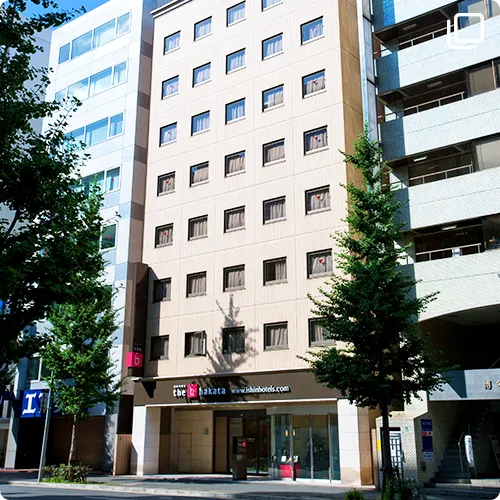
The budget-business reference point for Hakata. Four to six minutes south of Chikushi-guchi, with a free “tottette” snack service in the lobby daily 15:00–19:00 and a 24-hour Matsuya beef-bowl restaurant directly on the building’s ground floor. Compact at 15㎡ for Standard Doubles, but the value is hard to argue with at this price band — 8.1 across 3,467 Booking reviews and 8.4 across 1,400+ Agoda.
Where Tenjin wins
Tenjin is the commercial heart of Fukuoka. Daimaru, Iwataya, Mitsukoshi, PARCO, and Solaria Plaza cluster within a few blocks of Tenjin Station — the densest retail concentration in west Japan outside Osaka. Add Tenjin Underground City (Tenjin Chikagai), a 1-kilometer subterranean network of shops connecting Tenjin Station to the Nishitetsu Tenjin Station, and you have an entire shopping ecosystem reachable without ever stepping above ground. If shopping is a meaningful part of the trip, Tenjin saves you 25 minutes of round-trip subway commuting daily.
The dining scene is similarly dense, but with a different character than Hakata. Hakata is breakfast-strong and late-night-strong; Tenjin is lunch-strong and dinner-strong. The Daimyo neighborhood (immediately west of Tenjin Station) is Fukuoka’s densest cafe-and-bar district, with vintage clothing shops, third-wave coffee, and a young-crowd nightlife that runs to 2:00 AM on weekends. Imaizumi (south of Tenjin) is the emerging dining frontier, with smaller, higher-quality independent restaurants opening over the past three years.
For longer stays — five nights and up — Tenjin’s residential pockets feel more like neighborhoods than transit hubs. The streets behind Akasaka Station, one stop west of Tenjin, are quiet and tree-lined; this is where Fukuoka locals choose to live if they can afford it. Guest reports frequently note this preference: travelers staying five nights or more skew toward Tenjin in repeat-visitor surveys.

Hotel Monterey La Soeur Fukuoka
Belgian Art Nouveau interiors inside Daimyo, Fukuoka’s densest cafe-and-bar district. Hardwood floors in all 191 rooms (rare in Japan), Mirable micro-bubble showerheads, pajamas, and a breakfast buffet that’s cited as the value differentiator. Repeat-visitor concentration is high — particularly travelers from South Korea, Taiwan, and Western countries returning for the Tenjin retail proximity. Honest caveat: the dark European aesthetic and compact bathrooms aren’t for everyone.
Solaria Nishitetsu Hotel Fukuoka
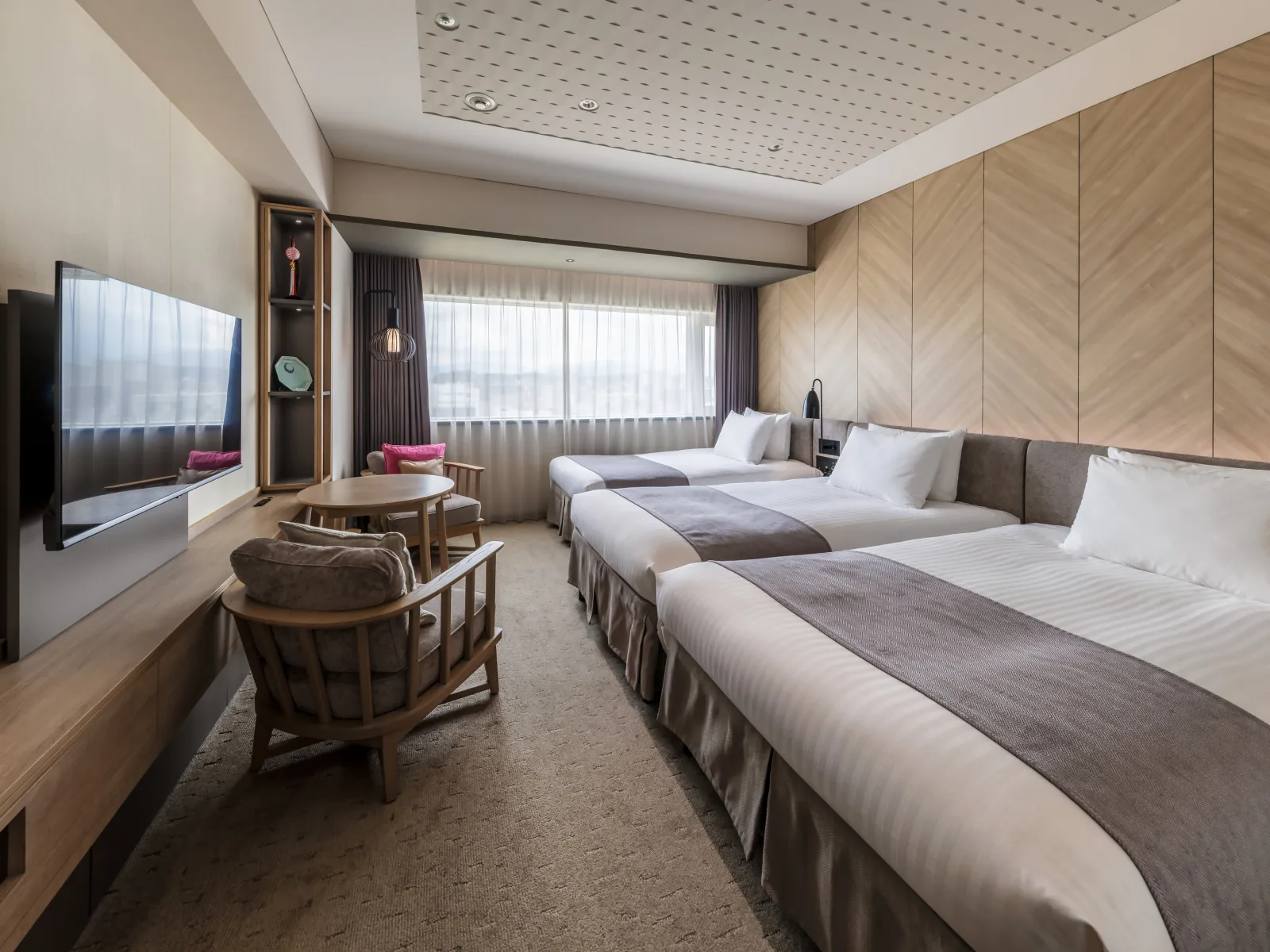
Built directly into the Nishitetsu Fukuoka (Tenjin) Station complex, with underground concourse connections to the Tenjin subway, the bus terminal, and onward to Hakata and the airport. Exceptional soundproofing — double-paned glass insulates rooms from one of Fukuoka’s busiest intersections — is the most-cited reason business travelers return. The 17th-floor Red Flamma breakfast room with skyline views is the differentiator over Tenjin’s other premium business hotels. Demand note: as the third-highest-search-volume hotel in Fukuoka (22,200 monthly), upper-floor park-facing rooms book out first — verify dates early.
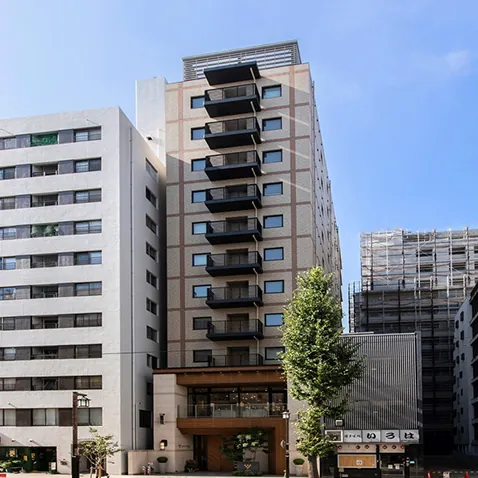
Hotel Vista Fukuoka Nakasu Kawabata
Geographically between Hakata and Tenjin — three minutes from Nakasu-Kawabata Station, ten minutes on foot to the riverside yatai food stalls. The on-site Musubi-no-Yu public bath (with a real-time crowd indicator on the in-room TV) is the most-cited differentiator, alongside the Japanese-style separated bathrooms with toilet and bath in different rooms. The honest position: arcade-adjacent quiet retreat, not a riverside property — windows face neighboring buildings, but that’s also what keeps the rooms quiet despite the Nakasu address.
Sub-areas decoded
The Hakata-vs-Tenjin binary is the right starting point, but the actual decision often comes down to a sub-area inside one district. Here’s what each one is for.
Hakata sub-areas
Chikushi-guchi (east side). Shinkansen platforms, the Kuko Line subway entrance, and the densest cluster of hotels. This is where most international travelers end up by default. Miyako Hotel Hakata, JR Kyushu Hotel Blossom Fukuoka, Hotel Forza Hakataeki II, and the b hakata all sit within 5 minutes of this exit.
Hakata-guchi (west side). The Hakata Bus Terminal, KITTE Hakata (shopping/dining), Hankyu Hakata. Slightly quieter than the east side, with airport limousine buses from FUK’s International Terminal arriving here. Nest Hotel Hakata Station is the main west-side hotel pick.
Hakataeki-minami (south of station). Quieter office-and-residential blocks, two to three minutes south of the Chikushi-guchi plaza. The b hakata and Hotel Forza Hakataeki II are both here. This is the practical pick if station access matters but you want to escape the immediate plaza noise.
Sumiyoshi. Between Hakata Station and Nakasu, anchored by Canal City Hakata and the Grand Hyatt. About 10–15 minutes on foot from the station; Kushida-jinja-mae subway station (Nanakuma Line) is the local stop. If indoor access to a major shopping complex matters, Sumiyoshi is the only Hakata sub-area that delivers it.
Tenjin sub-areas
Tenjin core. The cluster of Daimaru, Iwataya, Mitsukoshi, PARCO, Solaria Plaza, and the Tenjin Underground City. Solaria Nishitetsu Hotel sits literally above Nishitetsu Fukuoka (Tenjin) Station; Hotel Mystays Premier Tenjin and Comfort Hotel are nearby. This is the maximum-retail-access zone.
Daimyo. Immediately west of Tenjin core, walking distance of 5–8 minutes. Trendy, cafe-and-bar dense, vintage and independent fashion shops; this is where Fukuoka’s young creatives gravitate. Hotel Monterey La Soeur Fukuoka sits in the middle of it. The Ritz-Carlton, Fukuoka (opened 2023) anchors Daimyo Garden City, a mixed-use development that pushed Daimyo into the luxury bracket.
Akasaka. One subway stop west of Tenjin (Kuko Line), a 10-minute walk. Quieter, more residential, closer to Ohori Park and Maizuru Park (Fukuoka Castle ruins — the city’s main cherry blossom site). Travelers staying a week or more often prefer Akasaka for the neighborhood feel.
Imaizumi. Five to ten minutes south of Tenjin Station, on the opposite side of Watanabe-dori from Daimyo. Emerging dining and small-batch restaurant scene, fewer hotels but the area has gained traction over the past three years.
Nakasu. The river island between Hakata and Tenjin, technically its own district but bridging both. Home to the famous yatai food stall strip along the Naka River. Hotel Vista Fukuoka Nakasu Kawabata is the main Nakasu hotel; Hilton Garden Inn Fukuoka Tenjin North also sits on the Tenjin side of the river. For travelers whose top priority is “be close to the yatai,” Nakasu is the geographic answer.
Food and nightlife geography
The two districts have different food personalities.
Tonkotsu ramen — Hakata is the birthplace of the style and home to the most authentic shops. Hakata Issou, Sanpoutei, the original Ichiran location, and Hakata Hidakaya all cluster around Hakata Station. Tenjin has ramen shops, but the recognized name brands are Hakata-side. If a ramen pilgrimage is part of the trip, Hakata wins.
Yatai (open-air food stalls) — Nakasu has the largest concentration, 100+ stalls along the Naka River setting up nightly around 18:00. From Tenjin, the walk is 10–15 minutes; from Hakata, 15–20 minutes. Tenjin is the slightly closer base, but both are workable.
Yakitori, izakaya, sushi — Tenjin’s density is higher, particularly the Imaizumi and Daimyo blocks. Hakata has these too but the variety is narrower.
Cafes — Tenjin wins decisively. Daimyo alone has 30+ independent cafes; Hakata has KITTE Hakata, JR Hakata City, and scattered spots, but the cafe-as-destination culture is a Tenjin phenomenon.
Late-night dining — Hakata wins for 24-hour options (chain restaurants on hotel ground floors). Tenjin closes earlier on average but Daimyo bars run to 2:00 AM on weekends.
Bar scene — Daimyo (Tenjin) for cocktails, whisky, and a more international crowd. Nakasu yatai for sake and a domestic-traveler vibe. Pick by mood.
Seasonal considerations
July (Hakata Gion Yamakasa, July 1–15)
The festival is Fukuoka’s biggest cultural event, ending with a pre-dawn race of 14 floats from Kushida Shrine at 4:59 AM on July 15. Hakata hotel rates double during the two-week period and book out 3–6 months ahead. Tenjin hotels are largely unaffected on price. If you’re visiting specifically for Yamakasa, book Tenjin and take the early-morning subway to Nakasu-Kawabata Station (8–10 minutes plus a short walk to Kushida Shrine).
Spring (cherry blossom, late March to early April)
Maizuru Park (Fukuoka Castle ruins) is the city’s main hanami site — 10 minutes on foot from Tenjin Station, 8 minutes from Akasaka Station. Slight Tenjin advantage, but Hakata is also reachable in 15–20 minutes by subway. Hakata’s Kushida Shrine and Sumiyoshi Shrine have smaller, quieter cherry displays for travelers who want to avoid Maizuru’s crowds.
Autumn (September–November)
Mild weather, smaller crowds than spring, and the start of Kyushu’s autumn-foliage season. Either district works equally well. Day-trippers to Komyo-zen-ji in Dazaifu (one of Japan’s celebrated autumn foliage temples) have a slight Tenjin edge — the Nishitetsu Tenjin–Omuta Line departs from directly under the Solaria, reaching Dazaifu in 25 minutes for ¥420.
Winter (December–February)
Cold but rarely snowy in central Fukuoka. Indoor-connected hotels become valuable. Hakata has Canal City + JR Hakata City + underground concourse routes; Tenjin has Tenjin Underground City + Solaria’s underground connection. Both districts handle winter fine; the marginal advantage goes to whichever district has the indoor route to your daily destinations.
Who should pick which
| Traveler profile | Recommended district | Why |
|---|---|---|
| First-time visitor, ≤3 nights, day-trips planned | Hakata | Shinkansen + airport access optimization; Dazaifu, Kumamoto, Beppu day trips start here |
| Couple, 5+ nights, shopping/dining focus | Tenjin | Walkable retail and dining variety; less daily transit |
| Family with kids under 12 | Hakata (Sumiyoshi or Chikushi-guchi) | Indoor mall access, larger rooms common, transit-flexible |
| Solo female business traveler | Either — pick by where your meetings are | Both are very safe; pick by work location |
| Couple, Yamakasa festival (July 1–15) | Tenjin | Avoid Hakata price doubling; early subway to festival |
| Couple, romantic / anniversary stay | Tenjin (Ritz-Carlton or Daimyo boutique) | Hakata leans business; Tenjin has more atmospheric properties |
| Senior travelers, mobility concerns | Hakata | More indoor-connected hotels; station fully step-free |
| Backpacker / minimum budget | Hakata (Hakataeki-minami) | Budget business hotels densest; ¥7,000 starting from the b, Nest, etc. |
| Cherry blossom focus | Tenjin (Akasaka sub-area) | 8-minute walk to Maizuru Park |
| Yatai food stall focus | Nakasu or Tenjin | Nakasu is 10–15 min from Tenjin, 15–20 min from Hakata |
How to decide
A 60-second test: answer three questions.
-
Is your itinerary built around shinkansen day-trips or tight airport connections? If yes, choose Hakata. The five-minute walk between the station and your room compounds across a multi-day trip into a meaningful time saving.
-
Is shopping or dining variety a meaningful share of the trip? If yes, choose Tenjin. The walkable retail and restaurant density saves 25–40 minutes of round-trip subway commuting per day.
-
Are you traveling during Yamakasa (July 1–15)? If yes, choose Tenjin to avoid Hakata’s rate doubling, regardless of the other answers.
If the first two answers are tied or unclear, default to Hakata. Transit flexibility tends to matter more than retail proximity for travelers who haven’t decided yet what they’re optimizing for. The two districts are 10–12 minutes apart end-to-end by subway (a 5–6 minute ride on the Kuko Line plus the walk to the platform), ¥210 each way — whichever you pick, the other is reachable in under an hour round-trip.
FAQ
Which district is safer at night?
Both are very safe by Japanese standards — Fukuoka is consistently among the lowest crime rates of major Japanese cities. Late-night solo walking is widely reported as comfortable in both. Tenjin’s Daimyo gets livelier after 22:00 with bars; Hakata-eki-minami is quieter but well-lit. Solo female travelers report no specific issues in either area across aggregate Booking, Agoda, and Tripadvisor reviews.
Can I see Fukuoka in two days from either district?
Yes — both put the city’s core sights within 30 minutes by subway or foot. From Hakata: subway 5–6 minutes to Tenjin for shopping; walk 12 minutes to Canal City; walk 15–20 minutes to Nakasu yatai. From Tenjin: walk 10 minutes to Maizuru Park; subway 5–6 minutes to Hakata Station for Kushida Shrine; walk 10–15 minutes to yatai.
Which district is better for rainy days?
Slight edge to Hakata, driven by indoor-connected hotel routes: Grand Hyatt connects directly into Canal City Hakata, Miyako Hotel Hakata connects to the station via underground concourse, and JR Hakata City + KITTE Hakata are reachable from the station without going outside. Tenjin has the 1-km Tenjin Underground City and Solaria’s underground concourse, but more hotels require surface walks between weather-protected zones.
Which side has more 24-hour dining?
Hakata wins clearly. Hakataeki-minami has chain restaurants (Matsuya, Sukiya, Yoshinoya) literally on hotel ground floors — useful for late shinkansen arrivals and pre-dawn airport departures. Tenjin’s 24-hour dining is mostly convenience stores; sit-down restaurants typically close by midnight, with the exception of some Daimyo bars and izakaya.
Are sidewalks stroller and wheelchair accessible?
Hakata Station is fully step-free with elevators on every level; most major intersections in the surrounding blocks have curb cuts. Side streets in Hakataeki-minami narrow in spots. Tenjin’s main streets and Tenjin Underground City are accessible, but Daimyo’s small alleys and some Akasaka residential blocks have tighter sidewalks. For wheelchair-priority travel, Hakata has the structural advantage.
Is late check-in availability different between districts?
Both districts have plenty of 24-hour-staffed business hotels. Hakata has more raw inventory of 24h-front-desk properties (the b hakata, Hotel Forza Hakataeki II, JR Kyushu Hotel Blossom Fukuoka, Nest Hotel Hakata Station). Tenjin equivalents include Solaria Nishitetsu, Hotel Monterey La Soeur, and Comfort Hotel Fukuoka. If you’re arriving after 23:00, confirm the specific property’s policy at booking either way.
Which side is better for vegetarian or vegan diners?
Tenjin, modestly. Hakata’s signature dishes — tonkotsu ramen, motsunabe (offal hotpot), mentaiko, Hakata gyoza — are heavily meat- and seafood-based. Tenjin’s Daimyo and Imaizumi neighborhoods have more cafes and international restaurants that include dedicated vegetarian and vegan options. Neither district matches Tokyo or Kyoto for plant-based variety, but Tenjin has the working start.
Can I leave luggage with the hotel before check-in or after check-out?
All major hotels in both districts offer same-day luggage storage at the front desk. Hakata Station additionally operates Crosta Hakata, a paid luggage delivery service that ferries bags directly from the shinkansen gates to participating hotels (¥1,500 per piece; drop-off by 14:00 for same-day delivery after 18:00). Miyako Hotel Hakata and JR Kyushu Hotel Blossom Fukuoka are participating partners. Tenjin has no equivalent service yet — luggage must be brought to the hotel directly or stored in subway lockers (¥400–¥800 per day depending on size).
Are day-trip departure stations different?
Yes, and this matters more than most travelers realize. Hakata Station is the launchpad for JR Kyushu and Sanyo Shinkansen — Kumamoto, Nagasaki, Beppu, Yufuin, Kagoshima, and onward to Osaka and Tokyo all start here. Nishitetsu Tenjin Station is the launchpad for the Nishitetsu Omuta–Dazaifu Line, which serves Dazaifu Tenmangu (one of Kyushu’s most-visited shrines) at ¥420 round trip and is the cheaper, faster option than the JR route. If your day trips lean Nishitetsu (Dazaifu, Yanagawa), Tenjin gains a small but real edge.
JR Kyushu Rail Pass
Collected at Hakata Station, and the reason Fukuoka works as a base rather than a stop. Beppu, Kumamoto and Nagasaki are all same-day returns on the JR network, and the pass stops you buying each leg separately.
Decide before you arrive — it is collected at the station, not bought on the train. Booking through this link pays us a commission. You pay the same price, and it does not change what this page says.
Is the price gap between districts meaningful enough to drive the decision?
Usually not. Hakata’s mid-range and Tenjin’s mid-range overlap heavily (¥10,000–¥30,000 / night is the busy intersection). The district decision should be driven by trip type, not by a ¥2,000–¥5,000 nightly price difference. The exceptions are Tier 1 luxury (where Tenjin’s Ritz-Carlton runs ¥80,000–¥150,000+ at the high end, well above Hakata’s Grand Hyatt ceiling) and the Yamakasa festival window (when Hakata doubles).
Read next
- Best Hotels Near Hakata Station — Your Gateway to Kyushu
- Best Luxury Hotels in Fukuoka — Where to Stay in Style
- First-Time Fukuoka — What to Know Before You Book